
Lenten Messiah Day 2
Day Two. What makes the story of Handel’s Messiah is that…
What’s Up with Weird Bible Sex?
Why you shouldn’t skip over the R-rated parts of Genesis.

This is the second article in a short “Genesis January” series to help people explore the complexity of the Bible at the start of a new year.
So you’re starting a Bible reading plan in Genesis? Well, buckle up, because Genesis might be the most sexually wild book in the Old Testament. Of course, that’s not how we tend to think of Genesis, but the sex scenes are there. From the slightly cringey to the extremely upsetting, sex appears with and without euphemism in these origin stories of Israel.
I still remember the first few times that I read the book of Genesis as a new Christian. I didn’t know much about it beyond some vague notions of a flood and a guy named Abraham. I was a blank-slate reader. I never expected to find scenes that couldn’t have been shown on broadcast television—as salacious as the first few episodes of an HBO series. But of course these are not scenes of erotic titillation designed to hook the audience. Something much stranger is happening. Sex, we learn from the first book of our Scripture, is central to our participation in God’s work.
The topic arises ordinarily and early in the book of Genesis. Both creation accounts end with sexualized humans. In Genesis 1, we read, “In the image of God he created them, male and female he created them” (v. 27, NRSVue throughout). The male-female image of God already contains the potential for sex. And the two sexes have at least one purpose: procreation. The second creation account ends with man and woman becoming “one flesh” (2:24).
After their exile from the garden of Eden, the couple produces three sons. But the narrator does not merely tell us that they had three sons. Instead, Genesis 4 is punctuated …
Wheel and Heal: Medical Bus Wins Award for Church Innovation
After hospitals closed in rural Tennessee, church volunteers stepped in to provide basic care, cut hair, and pull teeth.
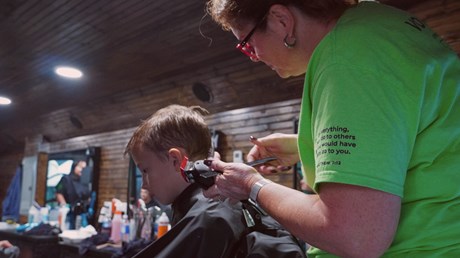
With six trucks and some volunteers, a church in Tennessee is helping to fill a gap in rural health care. The ministry, Doing Unto Others Mobile Mission, or DUO, thinks other churches can do the same.
DUO is one of four newly announced winners of grants from church insurer Brotherhood Mutual Insurance, which wants to reward innovative church programs that could be replicated across the country. Other winners include a mentoring program with local business leaders and teens, an afterschool tutoring program, and a homeless ministry.
In about two hours with DUO’s fleet, a person in rural Tennessee can see a doctor, pharmacist, optometrist, and dentist, and even get a haircut. The ministry started in 2021 and only operates monthly a few months a year, but it has saved the US health system $3.8 million dollars and 42 emergency room visits, according DUO’s estimates using the Mobile Health Map evaluation from Harvard Medical School.
Jamestown, Tennessee—a city of 1,900 located in Upper Cumberland—needed DUO’s support after losing its only hospital in 2019 due to financial constraints. Emergency services had to take local patients to another hospital nearly an hour away. Another hospital in Cumberland closed in 2020.
Tennessee has the highest closure rate of rural hospitals per capita of any state.
Samuel LeFave, a Christian and recent Tennessee Tech biochemistry graduate, was interested in medical school when he got to know a family in Jamestown and heard about the desperate state of rural health care. His pastor at Life Church in Cookeville, Tennessee, an hour from Jamestown, asked him about setting up a medical program, since LeFave had worked with a free clinic as an undergraduate. LeFave, then 21 years …
After Answered Prayers for Damar Hamlin, What’s Next?
The faith intertwined with American football may also call us to care better for the players whose bodies bear the brunt of the sport.
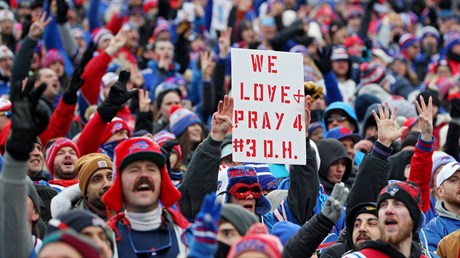
Football is filled with moments of prayer. As a historian who studies sports and Christianity, I’ve written before about the ways the practice in enmeshed in the sport; it’s so common that it can be rightly understood as part of the fabric of the game.
Still, last week’s public outpouring of prayer in support of Buffalo Bills safety Damar Hamlin stands out for its scale and scope. With Hamlin’s life hanging in the balance, people throughout the NFL community and across social media turned to a higher power, desperately seeking comfort and hope. The intensity was so great that The New York Times and the Associated Press ran stories seeking to explain what was going on.
It was a remarkable moment for those of us who believe in a God who hears our prayers, and it was even more remarkable to learn that God seemed to be granting our requests. Reports last week told of recovery and healing for Hamlin, detailing notes that he wrote to a nurse (“Did we win?”) a video chat with his team (“Love you boys”), and social media posts thanking his supporters (“The Love has been overwhelming.”).
When former NFL player Sam Acho responded with a tweet—“God is so good. Prayer works.”—the appropriate response for us should be “Amen.”
At the same time, before the heightened emotion of the moment recedes and the NFL playoffs begin, it’s worth pausing to reflect on what transpired. What lessons can we learn, what next steps should we take? As Christians, how do we make sense of all that has happened?
With a nod to Damar Hamlin’s jersey number, three key points and possibilities stand out to me.
First, the prayers that seemed to blanket social media …
Died: Jack Hayford, Pentecostal Pastor Who Wrote ‘Majesty’
Foursquare leader put emphasis on praise and penned the most popular church song of the 1990s.
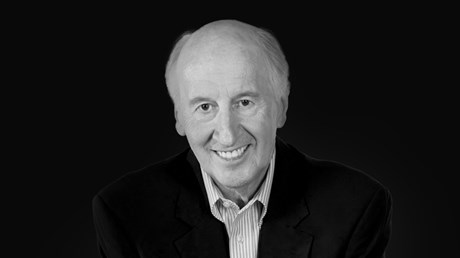
Jack Hayford, the Foursquare Church leader who taught evangelicals that God is enthroned in the praises of his people, died on Sunday at the age of 88.
Hayford was the longtime pastor of the Church on the Way in Van Nuys, California; the author of “Majesty” and more than 500 other praise and worship songs; and the fourth president of the International Church of the Foursquare Gospel. He regularly led weeklong seminars for pastors that expanded and shaped evangelicals’ view of worship. He convinced a wide range of people not only to occasionally raise their hands while praying and accept glossolalia as a special prayer language but also, more importantly, to see worship as central to the work of the church.
“Worship has often been misunderstood as the musical prelude,” Hayford wrote, “rather than the means by which we, as the people of God, invite the dominion of his kingdom to be established on earth. Psalm 22:3 says that the king of kings is literally ‘enthroned’ in our praises. Wherever God’s people come together to worship, we become a habitation for his presence.”
Hayford was a Pentecostal bridge-builder and a pastor to pastors who did much to promote charismatic renewal practices. Even people who had historically been skeptical of Pentecostalism were drawn to Hayford.
“I think pastors sense in him what they are longing to be,” Lloyd Ogilvie, a Presbyterian minister who worked closely with Hayford, said in 1989. “He is rooted in historic Christianity, has the fire and dynamism of a charismatic, understands the relevance of social responsibility, and can mobilize individuals. … You don’t usually find those qualities combined in one …
Church Attendance Dropped Among Young People, Singles, Liberals
Overall, most churchgoers—including most white evangelicals—returned to the pews after the pandemic, survey finds.
Despite the short-term upheaval COVID-19 caused among American churches, the pandemic’s long-term effect on worship attendance patterns was minimal, according to a study released Thursday by researchers at the American Enterprise Institute (AEI) and the University of Chicago. The biggest exception to that trend occurred among young adults, whose church attendance took a major hit.
“Rather than completely upending established patterns, the pandemic accelerated ongoing trends in religious change,” wrote study authors Lindsay Witt-Swanson, Jennifer Benz, and Daniel Cox.
“Young people, those who are single, and self-identified liberals ceased attending religious services at all at much higher rates than other Americans did. Even before the pandemic, these groups were experiencing the most dramatic declines in religious membership, practice, and identity.”
Two-thirds (68%) of Americans reported the same level of church attendance both before and after the COVID-19 pandemic. Yet pandemic-accelerated declines among some groups left US church attendance down overall.
Before the pandemic, 75 percent of Americans reported attending religious services at least monthly. By spring 2022, that figure dropped to 68 percent attending at least monthly.
Those findings were drawn from the 2022 American Religious Benchmark Survey, which polled 9,425 Americans by phone and online between February and April 2022. To help researchers focus on pandemic-driven changes, the study included only individuals who had registered their religious affiliations and church attendance patterns in a previous survey between 2018 and March 2020.
Young adults (ages 18–29) reported the greatest change in religious attendance following …

Interview: The Relatable Zeal of Puritan Women
They were extremely into religion without being extreme. Having grown up…

Christian Fiction Queen Says Goodbye to Hallmark, Hello to Karen Kingsbury Productions
As novelists embrace entrepreneurship, they find ways to take more control….

The State of Quiet Time: Who’s Most Likely to Practice Daily Devotions
Survey finds that two-thirds of churchgoers set aside time with God…
